


 |
| 
INTERNATIONAL STAFF TRAINING CENTRE

 +7 (911) 928-95-75+7 (921) 768-77-70+7 (905) 222-51-38
 istc@idgca.orginfo@idgca.org
Dangerous Goods Specialist

A company engaged in the transportation, acceptance, storage, dispatch, and/or related operations with dangerous goods must employ appropriately trained management and personnel. This requirement is set forth in Chapter 1.3 of the UN Model Regulations on the Transport of Dangerous Goods, the relevant chapters of the International Maritime Dangerous Goods Code (IMDG Code), the Regulations under the Agreement concerning the International Carriage of Dangerous Goods by Road (ADR), the Regulations under the European Agreement concerning the International Carriage of Dangerous Goods by Inland Waterways (ADN), Annex 2 "Rules for the Transportation of Dangerous Goods" of the Agreement on International Goods Transport by Rail, and Chapter 1.4 of the ICAO Technical Instructions for the Safe Transport of Dangerous Goods by Air.
Any company employee who has not completed the required training or has not completed further training after the expiration of their training document is not permitted to handle dangerous goods. Compliance with this regulation ensures an adequate level of safety during the transportation and handling of dangerous goods.
The International Staff Training Center has extensive experience training specialists in the transportation and handling of dangerous goods. The core document studied in the courses is the UN Model Regulations on the Transport of Dangerous Goods, as this document forms the basis for industry-specific regulations for the transport of dangerous goods (by sea, inland waterway, road, rail, and air). The courses train specialists for specific modes of transport, as well as those involved in the multimodal transport of dangerous goods.
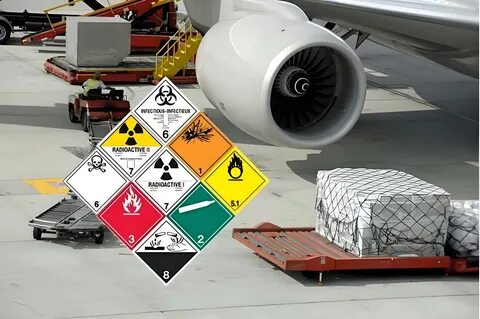
During the course, students learn the fundamental provisions of international conventions, codes, regulations, and standards, as well as the requirements of national legislation and regulations governing the transportation and handling of dangerous goods. Course graduates gain skills in the correct classification of dangerous goods, the selection of securing means for dangerous goods, the labeling of packages and transport equipment containing dangerous goods, the mitigation of risks associated with dangerous goods handling, the use of personal protective equipment, the provision of first aid to victims of dangerous goods incidents, etc. The course also pays a great attention to the rules for the use of high-capacity containers used for the transportation of dangerous goods, including tank containers used for transporting chemicals, petroleum products, and cryogenic liquids.
The training programs place particular emphasis on chemical products, and the courses cover the fundamental principles of the Globally Harmonized System of Classification and Labeling of Chemicals and its implementation mechanisms (safety data sheets and warning labels for chemical products).
The International Staff Training Center offers training programs for both managers (40 academic hours of the basic program) and rank-and-file personnel (24 academic hours of the basic program).
At the request of companies, tailored professional development programs can be developed and implemented, taking into account the specifics of their activities and the content of employee job descriptions.
Students who complete the 40-hour program are, upon their personal application, submitted for certification by the International Dangerous Goods and Containers Association (IDGCA), after which they receive internationally recognized Dangerous Goods Safety Adviser certificates valid for five years. IDGCA certificates are patent-protected.
Programs are available upon request.

Office 120, 436,440, 35A Marshal Govorov str., Saint-Petersburg, 198095, Russia. business-center "Zhyolty ugol"

